

Investment Philosophy
Our philosophy is simple: Investments that are goals-driven, risk-managed, and cost-effective produce better outcomes. Investors often come to us with the latest hot manager or investment product. We love their enthusiasm and seek to channel it into an investment framework that will serve them well. Investment products are to investing as bikes are to cycling: tools to help you achieve your goals. As you know, bikes don't win races, cyclists do. Likewise, hot managers and investment products don't achieve your life goals, you do.
It's not about the Bike...
It's About the Team
Yeah. It's cool to have the best bike, but it's the team that determines if you win. The same is true for investing, and we can be the team that determines how you win.
For more than 25 years, the partners of MK-Wealth (Ken and Ron), have worked together guiding clients through the ups and downs of the markets, including:
- the collapse of the Dot-Com Bubble
- September 11th
- the 2008-9 Global Financial Crisis: Equity Markets
- the 2008-9 Global Financial Crisis: Credit Markets
- the 2010 flash crash
- the 2018 crypto crash
- the 2020 COVID crash
- the 2022 stock market decline
- the post-COVID inflation spike
- the Federal Reserve raising interest rates by more than 5% from March 2022 to July of 2023
Our collaboration, insight and seasoned perspective, position us to design and implement strategies that align with your preferences while capturing the long-term returns offered by the markets, all in an impactful way to keep you on track to achieving your goals. Click here to learn more about the team
It's About the Policies
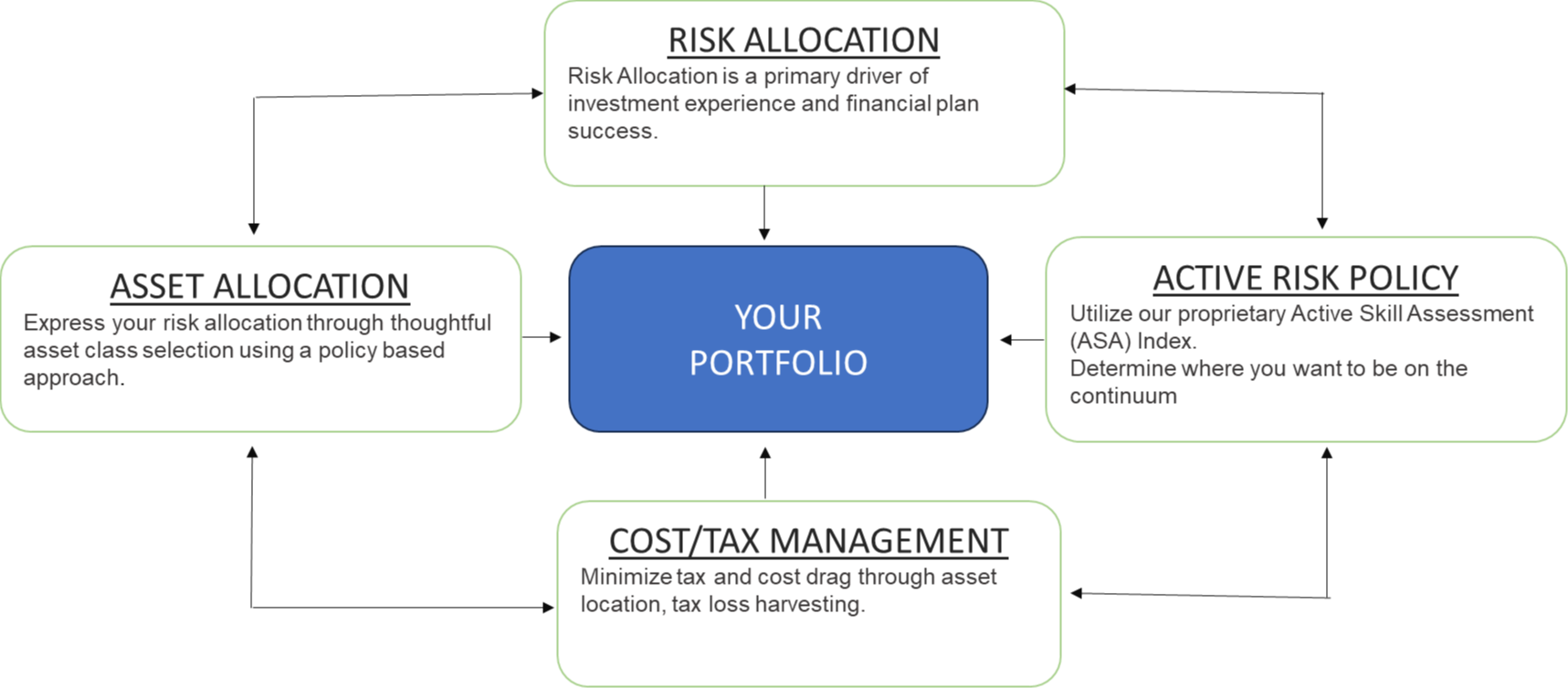
There are four investment policy decisions every investor makes whether they know it or not. Do you know what yours are? Making policy decisions explicit provides a foundation for clarity of purpose and the discipline that is so important to long-term investing success. What are the four key policy decisions that drive success? 1) Risk Allocation (how much risk you take). 2) Asset class allocation (what asset classes you use to achieve your risk allocation and their weights). 3) active risk policy (the use of active and passive investment strategies), and 4) implementation policy (strategies for implementing efficiently to reduce portfolio costs and taxes). Most people get the first one - risk allocation - as it is the one policy that the typical advisor makes explicit (think risk tolerance questionnaire). However, the rest of the policies are often non-explicit, a blur of advisor preferences, and a source of investing mistakes. We make all your policies explicit and a source of investing success.
Does your portfolio give you a sense of clarity, confidence and control? There are many possible portfolio policies to attain your goals. We can help you discern which policies are most appropriate for you. The result is a portfolio that empowers you with increased confidence, clarity and control. Like a Chief Investment Officer of a large institution, you engage advice to set the policies and delegate the portfolio to professional managers. We serve as your advisors to help you set your policies, and we serve as portfolio managers to implement your policies. We periodically review the policies with you to ensure they are still appropriate to keeping on track to achieving your goals.
It's About the Process
It's About the Portfolio
What's in Your Portfolio?
Your portfolio can tell us a lot about the policies being implemented on your behalf. Sign up for a complimentary portfolio review using the link below Through our review of your portfolio, we can identify your risk allocation, asset classes, active-risk and explore and match your intentions.
In addition, over the years, we have come to appreciate that strong risk management, tax management, and cost management form the basic building blocks of a solid investment program. Unfortunately, many of the portfolios we have reviewed take unnecessary risk, incur unnecessary taxes and are subject to unnecessary cost. Our complementary review will address these issues.
Portfolio Review Components
• Your overall risk allocation. how it may or may not match your risk tolerance, and if you are a planning client whether it is the best allocation to achieve your long term goals.
•Recent performance of your assets and overall allocation vs. alternative strategies.
•Portfolio costs including management fees, commissions, tax costs, and other potential hidden fees.
• Any tax inefficiencies within your holdings
•Our recommendation is designed to maximize compensation for bearing risk while managing tax and portfolio cost.