

Risk Allocation
Policy
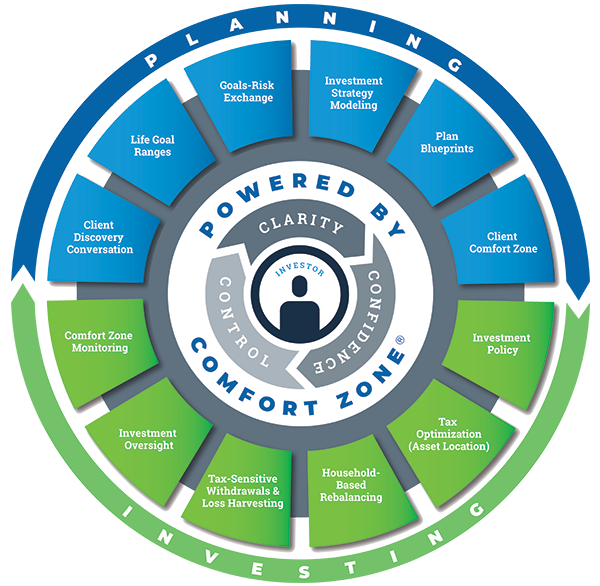
- Through the planning process, we target a risk level to align your asset portfolio to your goal portfolio.
- Without a plan, your asset-only risk target is typically set using your risk tolerance and time horizon or age.
Asset Allocation
Policy
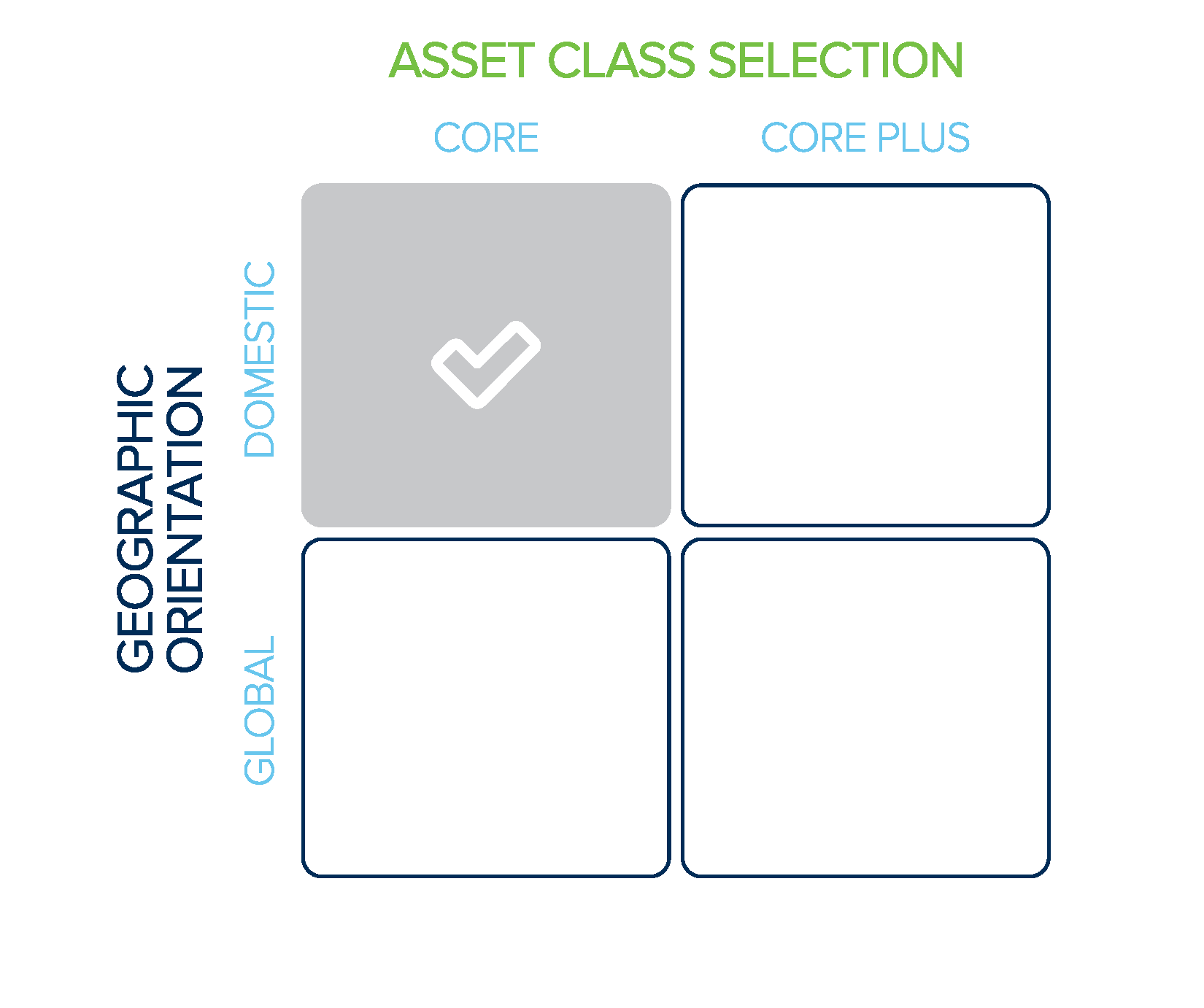
- Your risk allocation policy defines your preferred balance between growth and income assets.
- The asset class selection and allocation decisions determine how you will express your risk allocation.
Active Risk
Policy
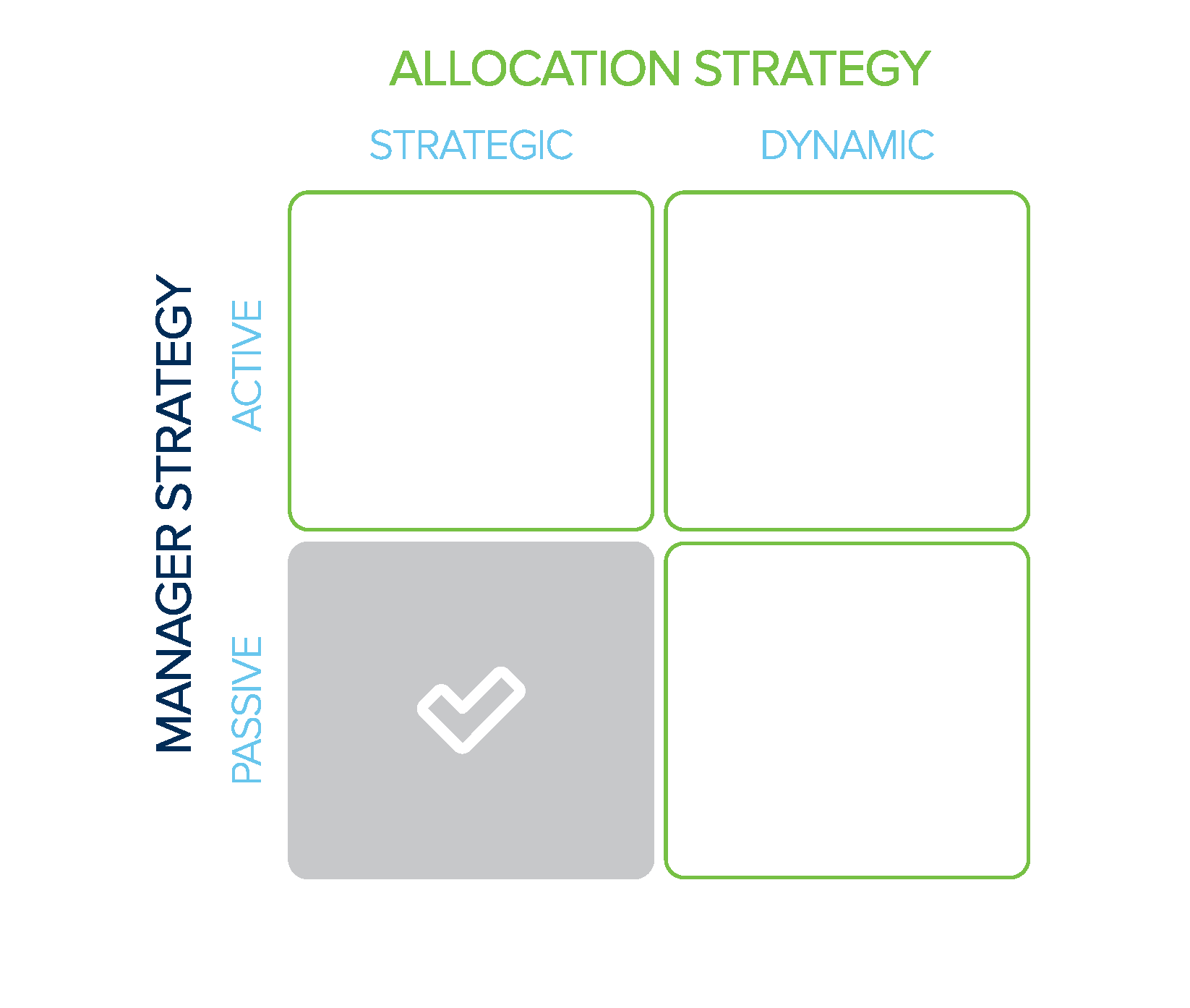
- Active strategies require manager skill. Without evidence of skill, go passive.
- Passive strategies require liquid markets to be effective. Where liquidity is low, consider active.

Manage Risks
Ongoing risks to manage
- Manage goal shortfall risk with the Comfort Zone
- Manage investment risk through diversification and advanced strategies
- Manage cognitive bias through thoughtful policy selection and evidence-based investing

Pay Less Taxes
Keep more of what you earn by:
- Locating high-tax assets in tax-deferred accounts
- Locating low-tax assets in taxable accounts
- Locating high-growth assets in tax-exempt accounts
- Systematically harvesting tax losses
- Utilizing tax-favored products and strategies

Control Costs
Only pay for potential value-added by:
- Using low-cost passive strategies in efficient markets
- Using cost-effective, risk-managed active strategies within less efficient markets
- Avoiding high-cost, low-value-added investments